

Hidden City Ticketing Website: The Ultimate Guide
September 26, 2026Airlines created the pricing structure behind hidden city ticketing to sell seats that travelers wouldn't buy at a higher direct-fare price. The modern traveler hack came later, when websites began surfacing itineraries where the layover, not the ticketed final destination, was the passenger's real stop. That history changes the question from “Who invented this loophole?” to “Why did airlines build a system that makes the loophole possible?”
A hidden city ticketing website finds a connecting itinerary that costs less than a direct ticket to the connection city. The traveler leaves the airport at the layover and skips the final segment. The practice can look simple on a search screen, but the contract, operational, and loyalty consequences require careful judgment.
The Origins of Hidden City Fare Tactics
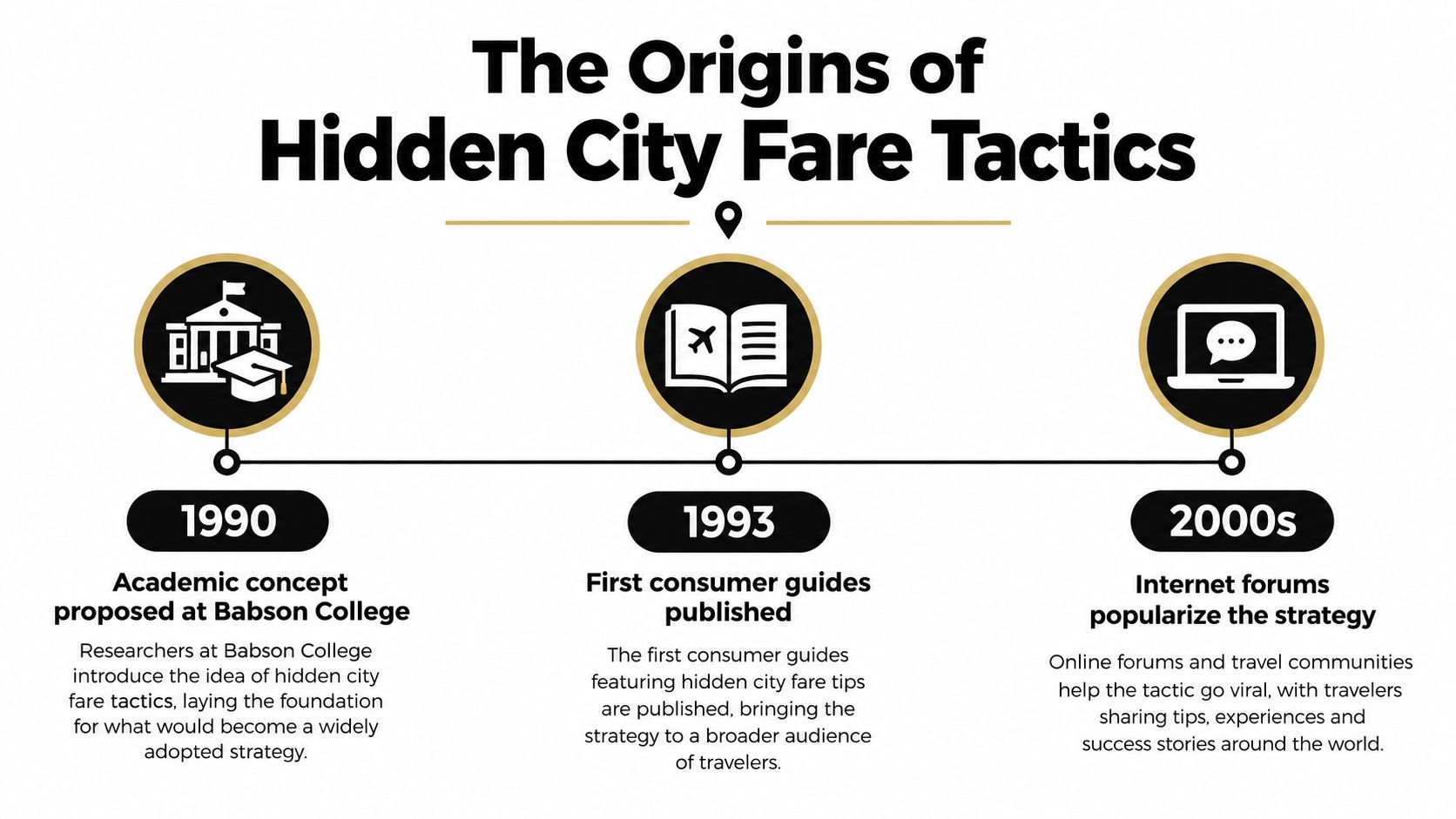
Hidden city fares began as an airline revenue tool, not a traveler's loophole. In the early 1990s, students and travel-minded analysts at Babson College observed that airfare followed demand and commercial strategy more closely than distance or convenience. A longer itinerary could cost less than a shorter nonstop flight to a city along the same route.
That insight established the basis for hidden city tickets, hidden city fares, and point beyond fares. The history of the practice, including its connection to business-class pricing, is documented in the history of hidden city ticketing and business-class fares. Involuntary Reroute later chronicled how this airline pricing structure became visible to travelers.
The original purpose was commercial. Airlines created the tool to benefit airlines, adjusting fares to sell unsold leftover seats to passengers unwilling to pay a higher price for a direct or premium itinerary. A simple analogy helps: the airline built the pricing maze to fill seats, while travelers eventually learned to read the route map differently. The consumer tactic appeared when passengers recognized that an airline's preferred fare structure could also create a cheaper stopover option.
From institutional knowledge to public discovery
Travel-industry analysts had discussed hidden city fares for years, and travel agents sometimes recommended them. The practice reached a wider public in 2013, when Skiplagged began displaying itineraries in which the scheduled connection was the traveler's actual destination, according to TravelPulse's account of hidden city ticketing's history and legal status.
Search technology changed the audience. An obscure fare practice became something ordinary travelers could find, compare, and book. Airline scrutiny followed. United Airlines and Orbitz sued Skiplagged in 2014–2015, and the case was later dismissed. American Airlines filed another federal lawsuit in 2023, illustrating the legal pressure surrounding the website model.
Historical lens: The website did not create the pricing inconsistency. It made an existing inconsistency visible to ordinary travelers.
Involuntary Reroute places modern hidden city websites within the longer history of airline revenue management. Travelers rediscovered a system airlines had built themselves.
How Hidden City Fares Actually Work
The price difference comes from the fare, not from a special kind of seat. Airlines publish a ticket whose scheduled route continues beyond the traveler's intended stop. The traveler uses the earlier connection as the practical endpoint and does not board the remaining segment. The tactic depends on the relationship between the fare's destination and the passenger's actual destination.
Suppose Denver is the traveler's real destination. A nonstop ticket from New York to Denver may cost more than a New York to Portland itinerary that connects in Denver. The passenger books the second itinerary, leaves the airport in Denver, and skips the Denver to Portland flight. The saving appears because the airline is pricing the complete New York to Portland market differently from the New York to Denver market.
That difference reflects demand, competition, schedules, and commercial strategy rather than distance alone. An airline may set an aggressive fare for a route with strong competition or weaker demand while charging more for a direct city pair. A hidden city ticketing website can compare these published routes and expose the gap.
Why airlines built the structure
The airline-centered explanation changes how this practice should be understood. Hidden city fares originated in airline revenue management as a way to fill unsold leftover seats and reach travelers unwilling to pay the higher price associated with premium or direct routing. The modern consumer tactic is therefore a rediscovery of a pricing system airlines constructed for their own commercial purposes.
Airlines argue that hidden city ticketing takes away revenue. At the same time, their fare systems can make a premium-cabin seat on a connecting itinerary cheaper than a direct alternative that fewer than 15% of all flyers will pay for, according to I-Reroute's explanation of airline-created hidden city fares.
Airlines could make every fare follow a simpler structure, but that would reduce their ability to charge different customer groups according to their preferences. A business traveler who values time may pay more for a nonstop flight. A price-sensitive traveler may accept a connection to pay less. One seat inventory can consequently serve both markets.
| Aspect | Traditional Booking | Hidden City Booking |
|---|---|---|
| Ticketed destination | The passenger travels to the final city printed on the ticket. | The passenger plans to leave at the connection city. |
| Route | The ticketed destination matches the traveler's actual destination. | The itinerary continues beyond the intended stop. |
| Price logic | The fare reflects the selected origin and destination market. | The traveler compares the direct fare with a cheaper beyond-point itinerary. |
| Final segment | The passenger boards every scheduled flight. | The passenger skips the last segment after reaching the connection. |
| Baggage planning | Checked bags can usually travel to the ticketed destination. | Checked baggage is problematic because the ticketed endpoint is farther away. |
| Contract position | The booking follows the ordinary itinerary. | The booking may breach the airline's contract of carriage. |
As Faroway's explanation of hidden city ticketing notes, the passenger exits at the connection while airlines commonly prohibit the practice in their contracts. Skipping a segment can also affect later segments on the same ticket.
A hidden city fare is both a pricing opportunity and a contractual risk. A lower price does not mean the airline has agreed to provide transportation only to the connection city.
Navigating I-Reroute.com and Membership Benefits
A practical way to study this subject is to separate fare discovery from fare use. A platform may explain how point-beyond pricing works, show examples of airline tactics, and help you recognize patterns. You still need to read the ticket conditions, assess your travel needs, and decide whether the consequences fit your situation.
INVOLUNTARY REROUTE (I-REROUTE.COM) is a podcast and membership platform covering hidden city ticketing, AD75 agency discounts, travel agent IDs, mileage redemptions, and point-beyond fares. Its stated purpose is to help listeners spot value, challenge marketing myths, and travel more comfortably for less through narrative episodes and practical breakdowns of airline pricing tactics, as described on the INVOLUNTARY REROUTE website.
A careful research workflow
Start with the route you need, then compare the ordinary fare with itineraries that continue beyond your destination. Look for a connection city that matches your intended stop, and examine the schedule rather than focusing only on the displayed price.
Next, check the practical constraints:
- Travel direction: Confirm that the itinerary's connection occurs before the ticketed final destination.
- Baggage: Avoid assumptions about checked luggage. A bag may be tagged to the final city printed on the ticket.
- Later segments: Review whether the booking includes a return or additional flight that could be canceled after a missed segment.
- Operational flexibility: Consider what you'll do if the carrier changes the routing or assigns a different connection.
- Loyalty exposure: Decide whether the potential saving justifies putting miles, status, or an account at risk.
The platform's audio episodes and membership materials can add context that a flight search result won't provide. Subscribers can access a catalog of episodes, updates about fare behavior, curated episode paths, and branded merchandise. The site also presents narrative examples such as The Call and Soul for Seoul, which connect airline pricing tactics with the evolution of these practices.
The following video provides another way to examine the subject before you make a booking decision.
Use any educational resource to sharpen your questions, not to skip the responsibility of checking the airline's current rules. A fare discovery tool can show what exists. It can't guarantee that the carrier will preserve the routing, accept the unused segment, or protect your loyalty account.
Legal and Contractual Risks Explained
Hidden city ticketing is usually a contract dispute, not a criminal offense. The practice developed from fare systems that airlines created to manage revenue, which helps explain the irony behind today's consumer tactic. The same pricing logic that once served airline revenue goals can now conflict with the conditions attached to a passenger's ticket.
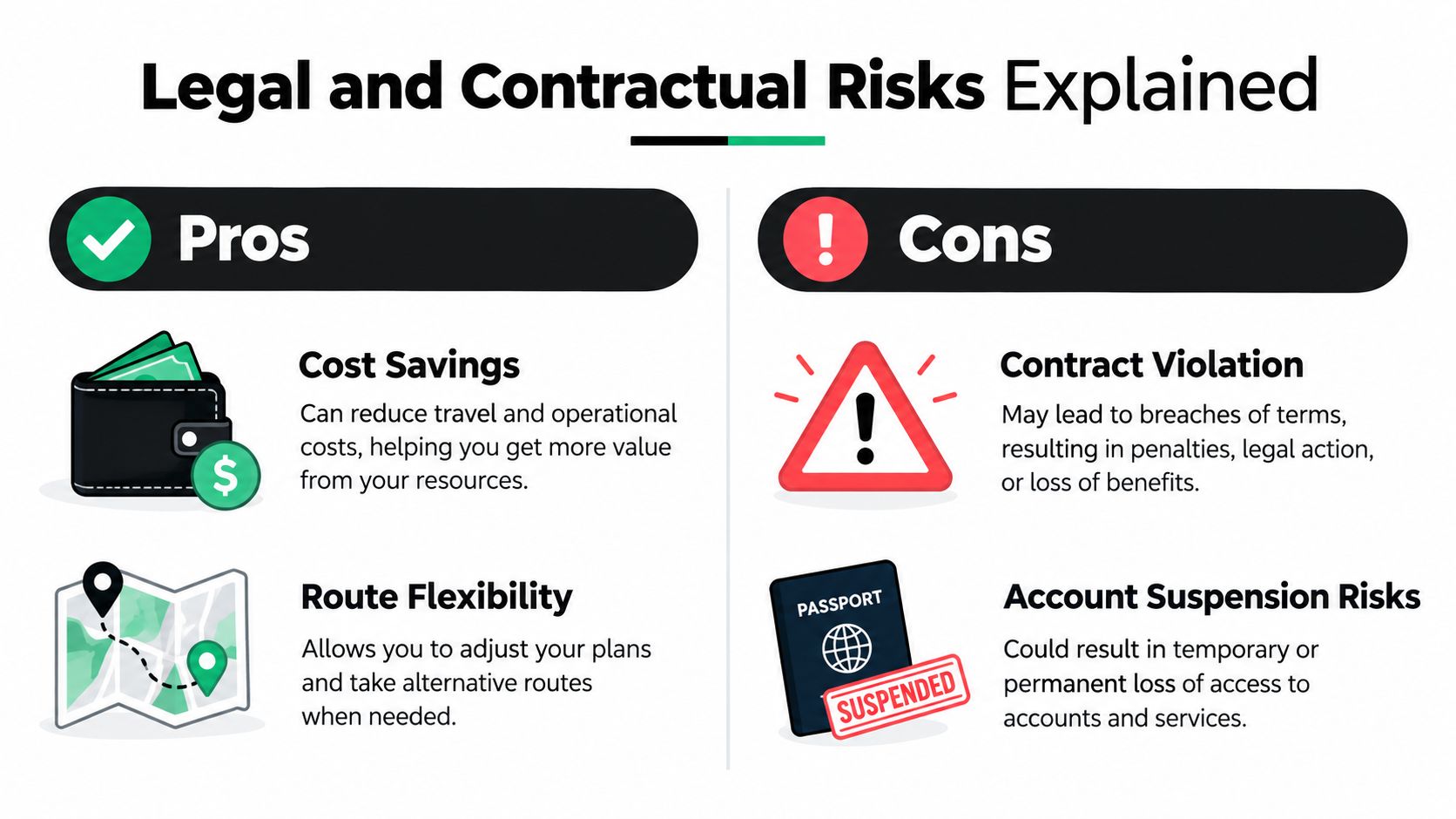
Most major airlines prohibit hidden city travel in their contracts of carriage. Depending on the circumstances, a carrier may cancel unused segments, refuse boarding, deny a refund, reprice the journey, or close a loyalty account. AFAR's explanation of skiplagging consequences describes these responses as contractual enforcement rather than criminal prosecution.
Legality and actionability are different
A traveler asking, “Is this illegal?” may get a less useful answer than someone asking, “What does the airline's contract allow it to do?” A practice can remain outside criminal law while still violating the private rules attached to a ticket.
The legal record also needs careful reading. United Airlines and Orbitz sued Skiplagged after the website attracted attention, and that case was later dismissed. American Airlines then filed a federal lawsuit in 2023. American Airlines litigation from 2023 and 2024, including a $9.4 million jury award and related class-action filings, is summarized in Travel Weekly's coverage of hidden city litigation.
A separate class-action challenge sought more than $4 billion and accumulated more than 500 filings over seven years. Those figures describe contested legal proceedings, not the penalty an ordinary traveler should automatically expect. They do show why airlines regard hidden city ticketing as a policy and contract issue, especially when the behavior appears deliberate or repeated.
Compare the trade-offs
| Choice | Potential benefit | Main exposure |
|---|---|---|
| Hidden city booking | A lower displayed fare on a suitable itinerary. | Contract enforcement, canceled segments, and loyalty consequences. |
| Ordinary direct booking | The ticket matches the trip you intend to take. | The fare may be higher. |
| Flexible-date search | More opportunities to find a lower permitted fare. | You may need to adjust your schedule. |
| Points or mileage redemption | A way to reduce the cash price without skipping a segment. | Availability and program rules vary. |
| Travel-agent discount | Access to agency channels and fare knowledge. | Eligibility and booking conditions require verification. |
The practical question is whether the saving justifies the exposure. For an important trip, valuable loyalty status, or travel involving checked baggage, the contractual downside may outweigh the fare difference. Airlines built the underlying fare structure as a revenue tool. A traveler using that structure for a different purpose still accepts the ticket's stated conditions.
How Airlines Detect Hidden City Bookings
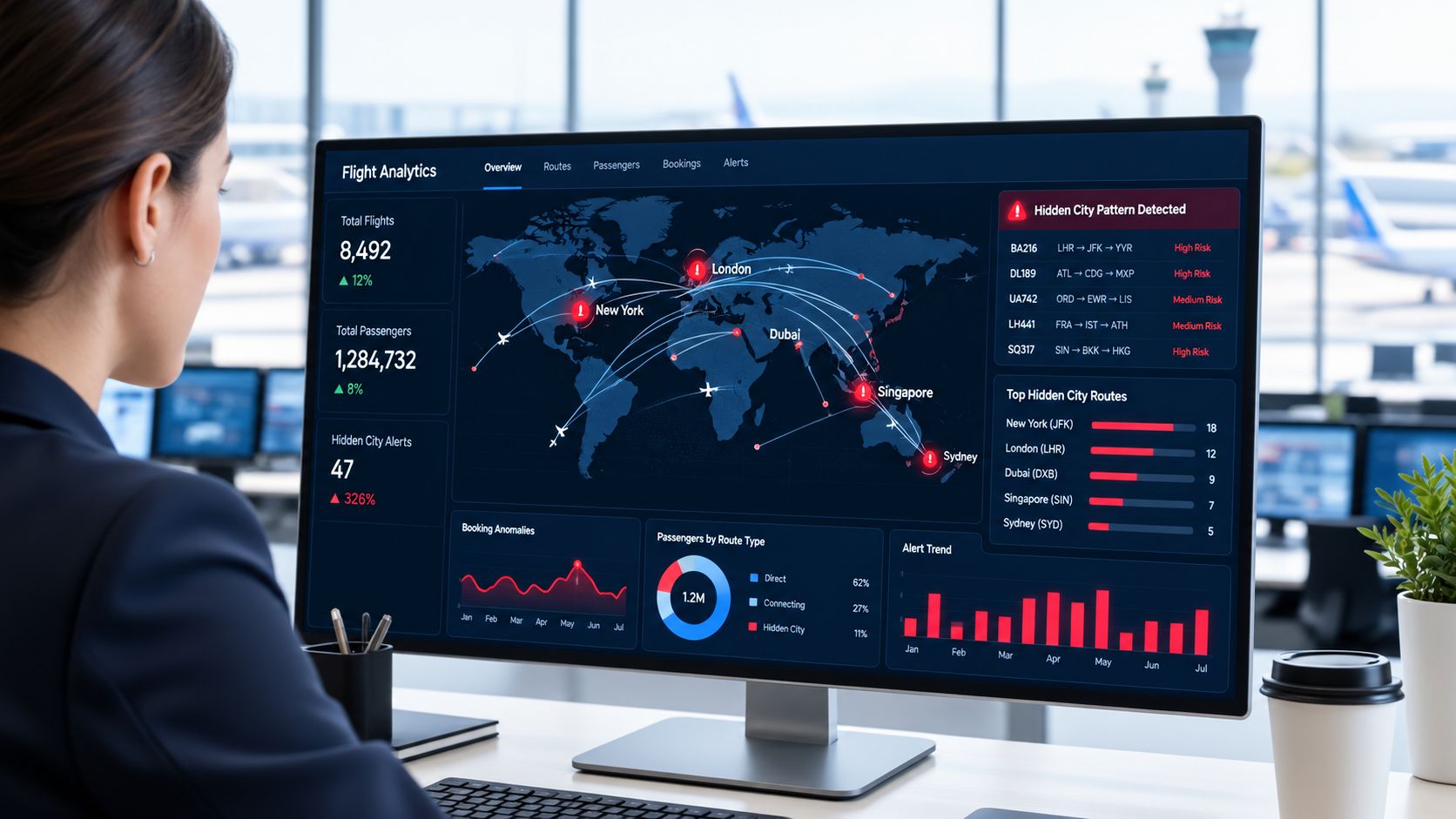
Airlines don't need to watch every traveler manually. They can compare booking behavior, boarding scans, and loyalty-account activity to identify patterns that suggest repeated hidden city use. A single missed segment may look like disruption or a personal change. Repeated behavior across similar itineraries gives the carrier a stronger basis for action.
This is why the risk isn't distributed evenly. Enforcement is selective, and reporting indicates that repeat or pattern-based behavior receives more attention than an isolated unused segment. One industry report claimed that 99.7% of Skiplagged bookings in 2024 had no consequences, a figure reported by InsideFlyer's coverage of hidden city enforcement. That statistic doesn't create a guarantee for any individual traveler.
Signals airlines can connect
Airline systems may examine whether a passenger repeatedly books beyond-point itineraries, boards the first segments, and fails to appear for the final ones. Loyalty accounts make those patterns easier to associate with a named traveler because booking history and travel activity sit in the same customer profile.
Operational data can also expose inconsistencies. A boarding scan confirms whether a passenger took a segment, while later reservations reveal whether the same person continues using the airline. These signals don't prove intent by themselves, but they help airlines distinguish an isolated disruption from recurring conduct.
Pricing changes affect the calculation
The economics can change even when the booking mechanics stay the same. Coverage of airline policy and fare changes points to a 2025 Southwest pricing reset and updated carrier rules in 2026, while noting that major U.S. carriers explicitly prohibit hidden city ticketing. JetBlue is described as an exception in explicit wording, but travelers still need to read the current conditions rather than rely on a generalization, as discussed by FareFinderAI's airline policy guide.
A smaller price gap means less reward for accepting the risk. A changed route can also eliminate the connection city that made the ticket useful. The sensible response is not to search for a way around detection. It's to treat the fare as uncertain and compare it with a permitted ticket before committing.
Myths vs Reality in Hidden City Ticketing
Myth one: consumers invented hidden city fares.
The historical record presented by I-Reroute.com points in the opposite direction. Airlines invented hidden city tickets and fares to benefit airlines, using them to dispose of unsold leftover seats that travelers refused to buy at higher prices. Consumers later recognized that they could exploit the same fare structure by leaving at the connection.
That distinction matters because it explains the contradiction at the center of the debate. Airlines can criticize passengers for using hidden city tickets while continuing to rely on complex pricing systems that create the opportunity.
Myth two: a lower fare means a fair shortcut
A hidden city fare isn't a special ticket to the layover city. It's a ticket to the final destination printed on the reservation. The passenger's plan and the airline's contract point to different endpoints.
That difference can create immediate practical trouble. If the airline changes the connection, the passenger may no longer reach the intended city. If the traveler skips a segment, the carrier may cancel later portions of the itinerary. The fare's low price doesn't remove those conditions.
Myth three: airlines could end the practice whenever they want
Airlines could simplify their fare structures, but they choose pricing systems that separate travelers by willingness to pay, schedule preference, cabin, route, and competition. The existence of hidden city opportunities reflects that commercial design.
The consumer sees a loophole. The airline sees a pricing architecture.
Myth four: “not criminal” means “no consequences”
That conclusion confuses public law with private contract. The practice may not be criminal, yet the airline can still enforce contractual rules and protect its commercial programs. Account action, canceled segments, denied refunds, and repricing can matter more to a traveler than a criminal classification.
A clearer view holds both facts at once. Hidden city ticketing is a consumer rediscovery of an airline-created tool, and airlines can still treat deliberate segment skipping as a contract violation.
Alternatives and Safer Travel Strategies
A lower fare does not require abandoning part of your itinerary. Begin with flexible dates, nearby airports, competing airlines, and permitted one-way combinations. These searches address the same pricing problem while keeping the ticket's stated journey intact.
Travel agents may identify agency fares, including AD75 discounts, when a traveler qualifies and the booking conditions are clear. Points and mileage redemptions provide another option, particularly when the cash fare is high but award availability is practical. These alternatives also show how the consumer tactic grew from pricing systems airlines originally designed, rather than from a special type of passenger ticket.
Use this decision process before paying:
- Define the core requirement: Decide whether you need a nonstop flight, a specific arrival time, checked baggage, or loyalty credit.
- Compare permitted options: Review the airline's ordinary fare, alternate carriers, nearby airports, and points availability.
- Read the conditions: Check cancellation, baggage, refund, and loyalty rules.
- Price reliability: A slightly higher fare may cost less overall if a missed connection disrupts work, accommodation, or an important event.
- Study the pricing logic: Educational resources can explain why fares differ without suggesting that every low price is safe to use.
INVOLUNTARY REROUTE presents airline pricing history and practical explanations through narrative episodes and fare breakdowns. Its material covers hidden city fares, agency discounts, mileage redemptions, and point-beyond pricing for travelers, students, business owners, and travel agents. The goal is informed comparison, not a promise that every apparent saving suits every journey.
Explore INVOLUNTARY REROUTE (I-REROUTE.COM) for background on the pricing history behind these strategies. Its podcast episodes and membership resources can help compare fare opportunities with contractual risks before booking.